Easy Miso Soup Recipe- Quick & Delicious Comfort
Miso soup recipe is more than just a starter; it’s a comforting embrace in a bowl, a whisper of tradition that warms you from the inside out. Have you ever found yourself craving that distinct, umami-rich depth that only a perfectly brewed bowl of miso soup can provide? It’s no wonder this Japanese staple has captured hearts worldwide. People adore it for its profound simplicity, its delicate balance of savory, salty, and subtly sweet notes, and its incredible versatility. What truly makes miso soup special is the magic of fermented soybean paste, the miso itself, which offers a complex flavor profile that’s both grounding and uplifting. It’s the ultimate culinary hug, perfect for a chilly evening, a light lunch, or as a delightful accompaniment to any meal.
Discover the simple joy of making your own authentic miso soup!
This easy miso soup recipe will become your go-to.
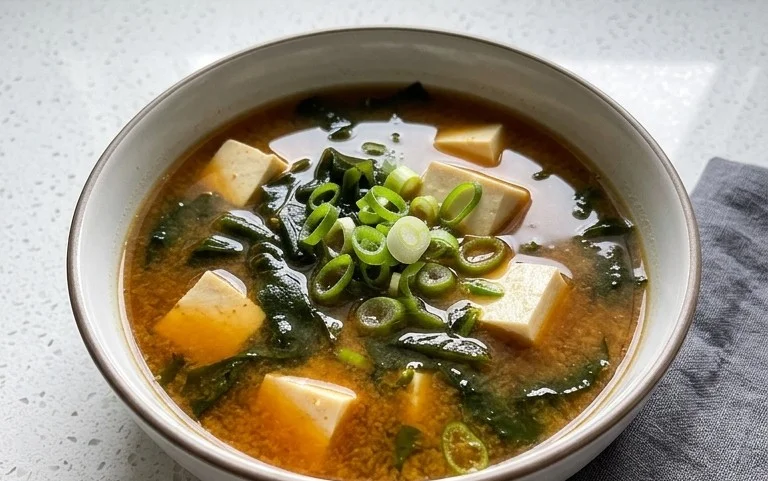
Miso Soup Recipe
There’s something incredibly comforting and satisfying about a steaming bowl of miso soup. It’s a staple in Japanese cuisine, offering a delicate balance of savory, umami-rich flavors and a warmth that can soothe you from the inside out. Often served as a starter or a side dish, it’s surprisingly simple to make at home, allowing you to customize it to your liking. Forget those instant packets; this homemade version is far superior in taste and texture, and takes just minutes to prepare.
I love making miso soup because it’s such a quick and versatile dish. It’s perfect for a light breakfast, a midday pick-me-up, or a healthy addition to any meal. The key to a fantastic miso soup lies in the quality of your dashi and miso paste, but even with readily available ingredients, you can achieve a truly delicious result. Let’s get started!
Ingredients:
Cooking Instructions
Preparing the Dashi and Seaweed
The foundation of any good miso soup is the dashi, a Japanese stock that provides a delicate, savory base. While you can make dashi from scratch using kombu (kelp) and katsuobushi (bonito flakes), for this recipe, we’ll be using pre-made dashi for simplicity. You can find instant dashi granules or liquid dashi at most Asian grocery stores or in the international aisle of larger supermarkets. Measure out 2½ cups of your chosen dashi and pour it into a medium saucepan.
Next, we need to rehydrate our dried seaweed. I’m using wakame seaweed, which is common in miso soup and has a lovely, tender texture once soaked. Take your 1 heaping tablespoon of dried seaweed and place it in a small bowl. Pour a little warm water over it, just enough to cover. Let it sit for about 5-10 minutes until it softens and expands. It will become much larger and have a more pliable texture. Once rehydrated, drain any excess water. If the pieces are too large, you can chop them into more manageable bite-sized pieces.
Assembling and Simmering
Now that our dashi is ready and the seaweed is rehydrated, it’s time to bring it all together. Place the saucepan with the dashi over medium heat. We want to bring the dashi to a gentle simmer, not a rolling boil. A gentle simmer will coax out the flavors without becoming too aggressive. As the dashi begin extracts to warm up, add the rehydrated seaweed to the pot. Stir it gently to distribute it evenly throughout the liquid. Allow the seaweed to simmer with the dashi for about 2-3 minutes. This short simmering time helps the seaweed soften further and infuse its subtle oceanic flavor into the broth.
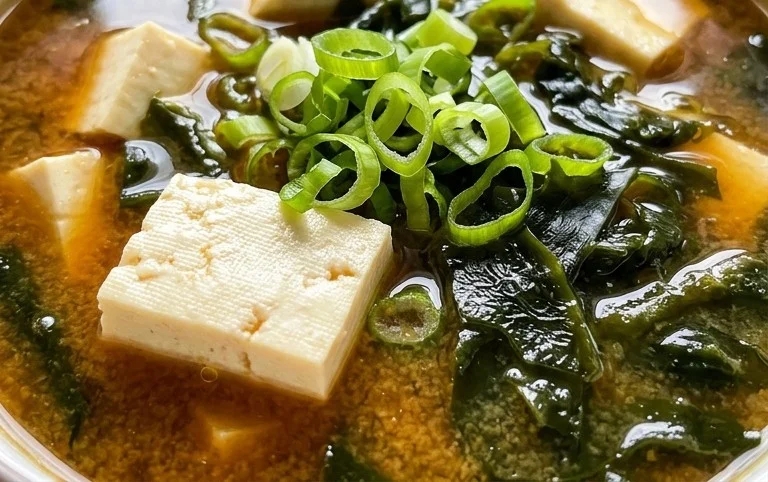
While the seaweed is simmering, prepare your silken tofu. I like to use silken tofu because it’s incredibly delicate and adds a wonderful creamy texture to the soup. Carefully cut your 4 oz of silken tofu into small, bite-sized pieces. Cubes of about ½ inch work well. Be gentle when handling silken tofu, as it can break apart easily. Add these tofu pieces to the simmering dashi and seaweed. Let them warm through for another 1-2 minutes. They don’t need to cook extensively, just to be heated.
The Miso Magic
This is where the magic happens. The miso paste is the star ingredient that gives miso soup its characteristic flavor. I’m suggesting 2 to 2½ tablespoons of miso paste, but this is where you can truly customize it to your taste. Different types of miso paste (white, red, or mixed) will yield different flavor profiles, with white miso being the mildest and sweetest, and red miso being the most intense and savory. Start with 2 tablespoons and add more if you prefer a stronger flavor.
Crucially, you never want to boil your miso paste. Boiling miso can diminish its delicate flavor and beneficial probiotics. Instead, remove the saucepan from the heat, or reduce the heat to its absolute lowest setting. Take a ladleful of the warm dashi from the pot and place it in a small bowl. Add your miso paste to this small bowl. Whisk the miso paste with the dashi until it forms a smooth, lump-free paste. This process, called ‘tempering,’ helps to dissolve the miso evenly into the soup and prevents clumping.
Finishing Touches and Serving
Once your miso paste is fully dissolved and smooth in the small bowl, gently pour this mixture back into the saucepan with the dashi, seaweed, and tofu. Stir everything together gently to combine. The soup should now have a lovely cloudy appearance. Taste the soup and adjust the seasoning if necessary. If you feel it needs a little more depth, add the remaining ½ tablespoon of miso paste and stir to dissolve.
Finally, it’s time for the garnish. Sprinkle the chopped scallions over the top of the soup. The fresh, sharp bite of the scallions provides a wonderful contrast to the savory broth and soft ingredients. Serve your delicious homemade miso soup immediately in individual bowls. It’s best enjoyed hot and fresh! This recipe is a fantastic starting point, and you can experiment with adding other ingredients like mushrooms, spinach, or even a splash of soy sauce for extra umami. Enjoy this simple yet profoundly satisfying taste of Japan!
Conclusion:
And there you have it – a simple yet incredibly satisfying Miso Soup Recipe! This dish is a testament to how a few humble ingredients can come together to create something truly special. Its inherent umami-rich flavor profile makes it the perfect starter for any meal, offering a comforting and nourishing warmth that’s hard to beat. Whether you’re looking for a quick weeknight accompaniment or a light, healthy lunch, this versatile soup is your answer.
We love serving our miso soup as a classic pairing with sushi or ramen, but don’t hesitate to get creative! It’s also a wonderful addition to a bento box, or even enjoyed on its own as a light meal. For variations, consider adding ingredients like silken tofu for extra protein, a sprinkle of toasted sesame seeds for crunch, or even some thinly sliced scallions for a fresh, pungent kick. You could also experiment with different types of miso, like red miso for a bolder flavor or white miso for a sweeter, milder taste.
We truly encourage you to give this Miso Soup Recipe a try. It’s an approachable and rewarding dish that will undoubtedly become a staple in your culinary repertoire. Enjoy the process and savor every delicious spoonful!
Frequently Asked Questions:
What kind of miso paste should I use?
For this recipe, a good quality white miso (shiro miso) is recommended as it provides a delicate, slightly sweet, and mellow umami flavor that’s very versatile. However, you can also experiment with yellow miso (awase miso) for a more complex taste, or red miso (aka miso) for a bolder, saltier, and more robust flavor profile. The type of miso you choose will significantly influence the final taste of your soup.
Can I make this miso soup recipe vegan?
Absolutely! This recipe is inherently vegan-friendly, provided you use vegetable broth or dashi made with kombu (sea kelp) and dried shiitake mushrooms instead of bonito flakes (katsuobushi), which are fish-based. Ensure your miso paste is also vegan. This is a fantastic way to enjoy the deliciousness of miso soup without any animal products.
How long does miso soup last in the refrigerator?
Miso soup is best enjoyed fresh, but it can be stored in an airtight container in the refrigerator for 2-3 days. It’s important to note that the flavor and aroma may diminish slightly over time. When reheating, do so gently over low heat and avoid boiling, as excessive heat can damage the delicate probiotics in the miso paste.
Miso Soup Recipe
A simple and comforting classic Japanese miso soup.
Ingredients
-
2½ cups Dashi
-
1 heaping tablespoon dried seaweed
-
4 oz silken tofu (cut into small pieces)
-
2-2½ tablespoons miso paste (or to taste)
-
1 tablespoon scallion (chopped)
-
1 teaspoon ginger, grated
Instructions
-
Step 1
In a saucepan, combine Dashi and dried seaweed. Bring to a simmer over medium heat and cook for 3-5 minutes, until the seaweed has rehydrated. -
Step 2
While the dashi is simmering, in a small bowl, whisk the miso paste with a few tablespoons of the warm dashi to create a smooth paste. This prevents clumping. -
Step 3
Add the silken tofu pieces to the saucepan. Gently simmer for another 1-2 minutes, just until heated through. -
Step 4
Remove the saucepan from the heat. Stir in the dissolved miso paste until fully incorporated. -
Step 5
Add the grated ginger and stir. -
Step 6
Ladle the miso soup into bowls and garnish with chopped scallions before serving.
Important Information
Nutrition Facts (Per Serving)
It is important to consider this information as approximate and not to use it as definitive health advice.
Allergy Information
Please check ingredients for potential allergens and consult a health professional if in doubt.